

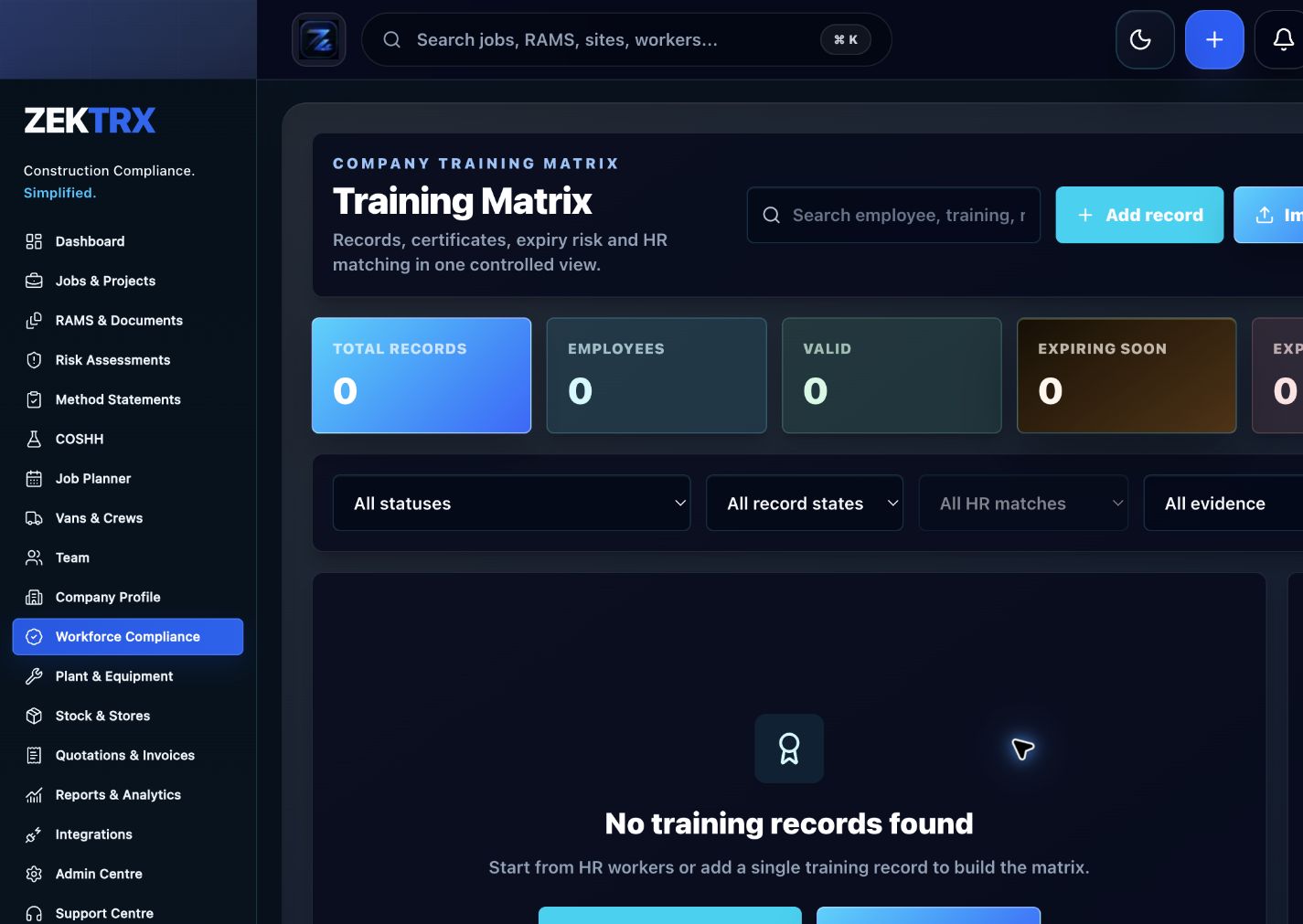
Training
Start with the right workflow screen
Move the guide from reading into the Zektrx area that can carry the checklist, actions and evidence.
The benefit-cost ratio compares expected benefits with expected costs. In construction software decisions, it helps teams weigh saved admin time, reduced rework, faster reporting, lower risk and better evidence against subscription, setup, training and rollout costs.
Training
Checklist
Define the decision being compared, such as a software rollout, workflow change or project investment.
List measurable benefits including time saved, reduced rework, fewer missed actions and faster reporting.
List costs including subscription, setup, data migration, training, internal time and change management.
Use the same time period for benefits and costs so the comparison is fair.
Separate hard financial savings from softer risk, compliance and client-service benefits.
Review assumptions with operations, finance and project leads before using the ratio for approval.
A plain-English benefit-cost ratio guide for construction teams comparing software, process improvements, safety workflows and project investments.
The benefit-cost ratio compares expected benefits with expected costs. In construction software decisions, it helps teams weigh saved admin time, reduced rework, faster reporting, lower risk and better evidence against subscription, setup, training and rollout costs.
Define the decision being compared, such as a software rollout, workflow change or project investment.
List measurable benefits including time saved, reduced rework, fewer missed actions and faster reporting.
List costs including subscription, setup, data migration, training, internal time and change management.
Use live Zektrx screens to manage the checklist, review tasks and supporting evidence.
Training
Move the guide from reading into the Zektrx area that can carry the checklist, actions and evidence.
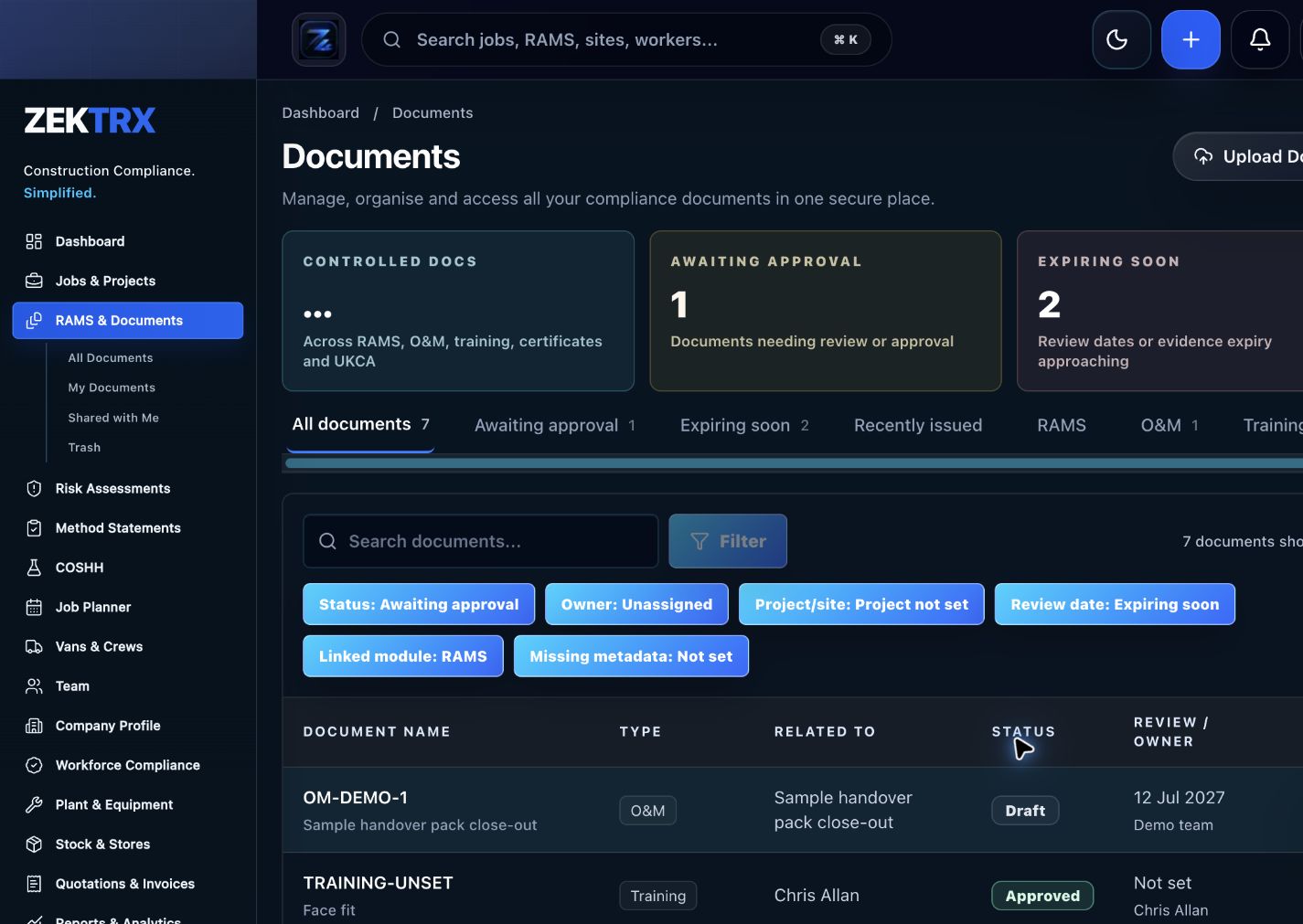
Documents
Keep current versions, review points, approvals and related proof attached to the same process.
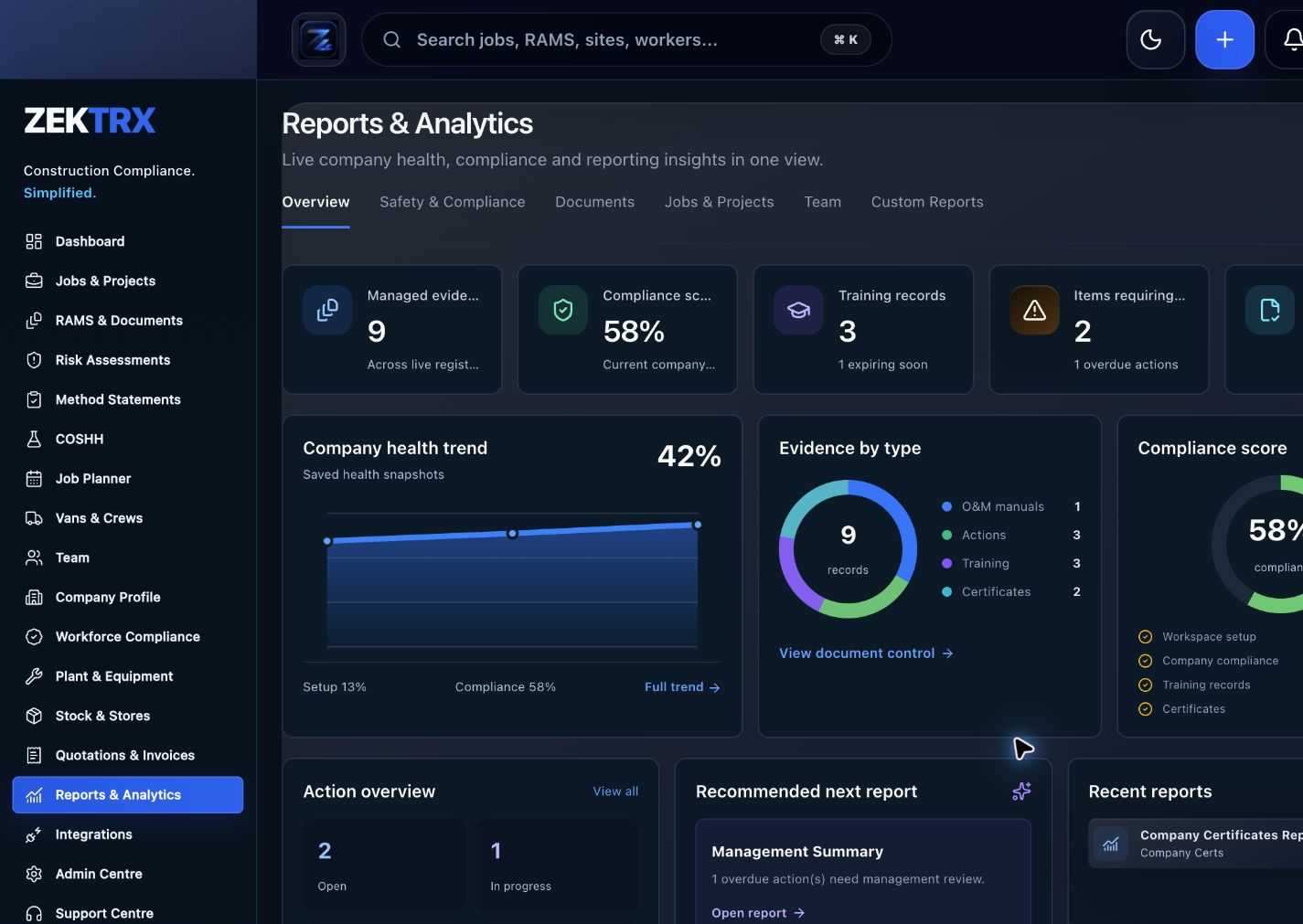
Reports
Use reporting and audit views to turn completed work into a cleaner management or client pack.
See the relevant Zektrx product area, the checks to complete and the practical steps for applying this guidance across your team.
Product area
Zektrx training matrix and competency record preview
Checklist
Define the decision being compared, such as a software rollout, workflow change or project investment.
Implementation
Start by reading the construction business case guide against one real project or job.
Related resources
Construction Project Cost Tracking Software / Construction Analytics Software
Connect written guidance with site activity, team briefings and the evidence records that show how the work was controlled.

Plan the work
Use each guide to decide the owners, records and review points before work starts.
Recommended check
Define the decision being compared, such as a software rollout, workflow change or project investment.

Brief the team
Turn guidance into toolbox talks, instructions and visible actions for the people doing the work.
Recommended check
List measurable benefits including time saved, reduced rework, fewer missed actions and faster reporting.

Keep proof
Connect checks, photos, sign-offs and follow-up tasks to the same operating record.
Recommended check
List costs including subscription, setup, data migration, training, internal time and change management.
Benefit-cost ratio is calculated by dividing total expected benefits by total expected costs for the same period. A ratio above 1.0 means expected benefits are higher than expected costs; below 1.0 means costs are higher than benefits.
The biggest gains may come from fewer duplicated forms, faster RAMS creation, cleaner document control, fewer missing photos, quicker reports and less time rebuilding evidence at handover.
Some benefits are harder to price but still matter, such as stronger audit trails, fewer missed inspections, better subcontractor control and clearer responsibility when something changes on site.
A benefit-cost ratio is helpful for comparing options, but it should sit alongside implementation effort, user adoption, security, data ownership and the quality of the workflow being purchased.
Zektrx helps turn repeated checks into owned actions, linked evidence and clear reporting.
Start by reading the construction business case guide against one real project or job.
Check whether your current process covers: Define the decision being compared, such as a software rollout, workflow change or project investment.
Check whether your current process covers: List measurable benefits including time saved, reduced rework, fewer missed actions and faster reporting.
Check whether your current process covers: List costs including subscription, setup, data migration, training, internal time and change management.
Decide which items should become live actions, approvals, signatures, evidence links or reports.
Evidence question 1
Who owns this record when it is created?
Evidence question 2
What proves the latest version was reviewed or approved?
Evidence question 3
Where are photos, signatures, comments and close-out evidence stored?
Evidence question 4
Can the record be exported for a client, auditor or principal contractor without rebuilding it?
See how resources become live compliance, site, document and reporting workflows.
Explore the operating system for trade businesses managing jobs, evidence and admin.
Move from templates and checklists into controlled RAMS creation, issue and signing.
A benefit-cost ratio compares expected benefits with expected costs. It is usually calculated as total benefits divided by total costs for the same period.
It means the expected benefits are greater than the expected costs based on the assumptions used. It does not guarantee success, so the assumptions still need review.
Contractors can compare the value of saved admin time, fewer errors, faster reporting, better evidence and reduced risk against subscription, setup, training and rollout costs.
No. They are related, but ROI usually expresses net return as a percentage, while benefit-cost ratio compares total benefits with total costs as a ratio.