

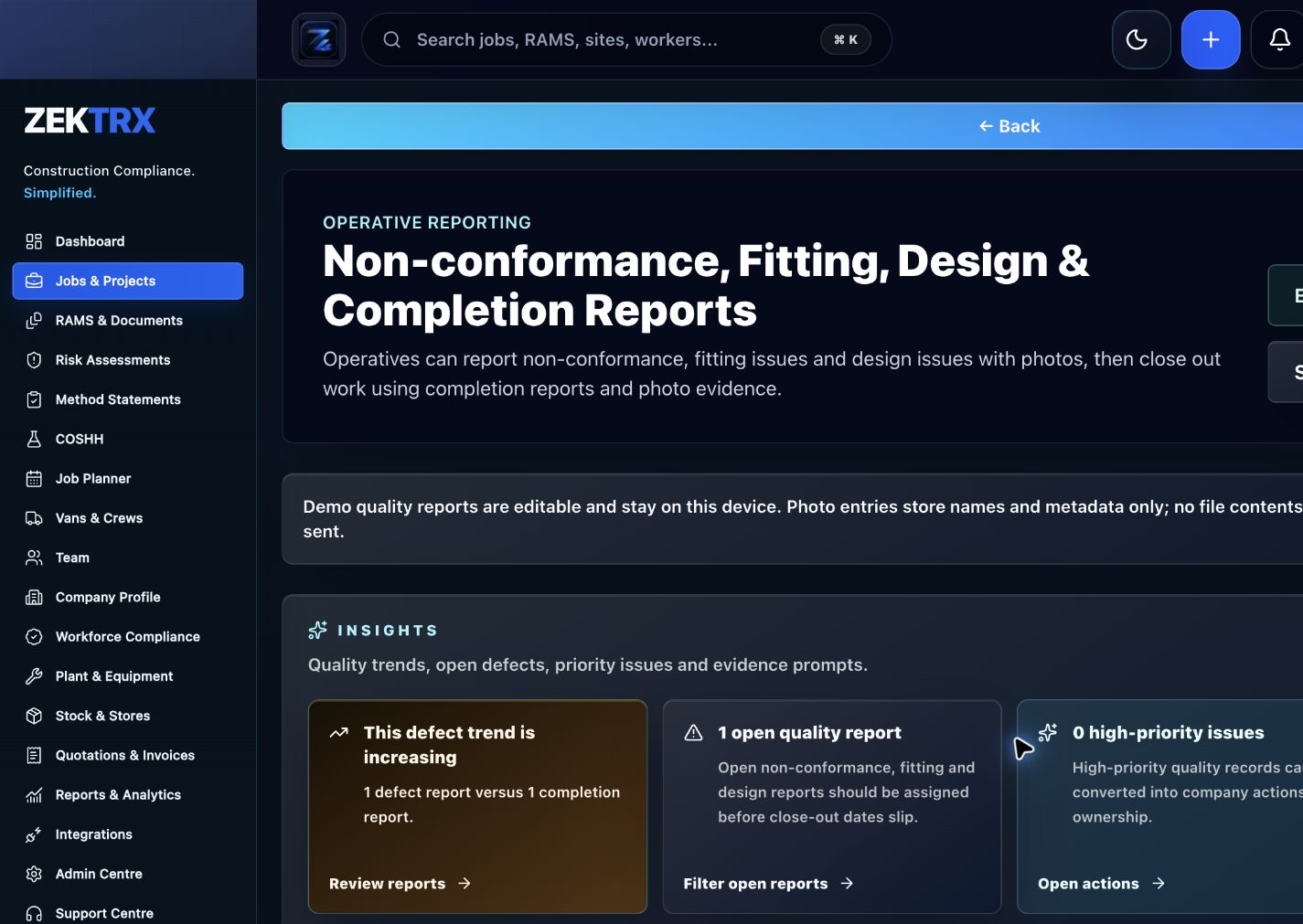
Incident
Capture the safety record while it is fresh
Log incidents, near misses, photos, immediate controls and follow-up actions from the same safety workspace.
Run a practical safety management system with AI-assisted RAMS, incident reporting, COSHH management, inspections, training tracking and audit-ready records in one contractor workspace.
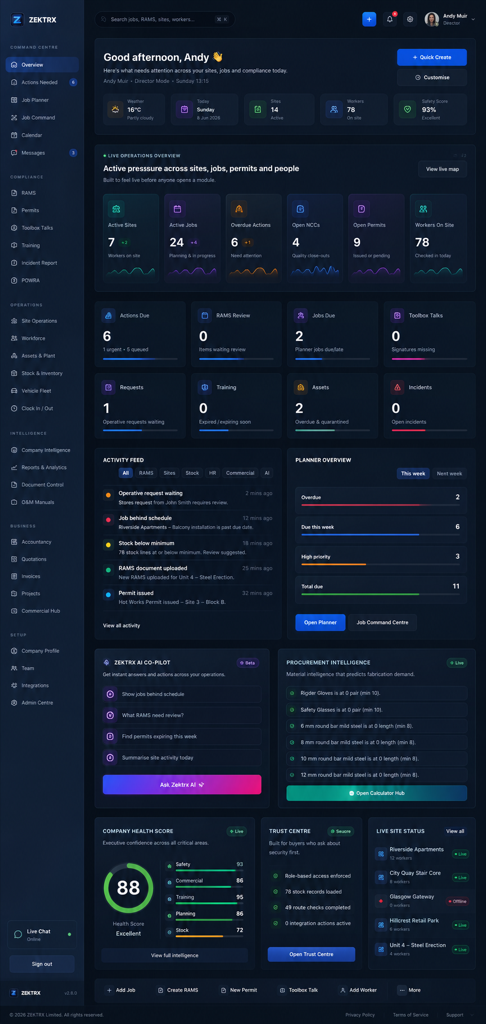
SMS preview
Audit-ready evidence
A safety management system is the repeatable way a company plans, controls, checks and improves safety. For construction teams, that means turning job hazards, RAMS, COSHH records, incidents, inspections, training and corrective actions into one operating programme instead of scattered paper and spreadsheets.
Define how safety responsibilities, approvals, expectations and records should work across jobs and crews.
Identify hazards, plan controls, brief workers and connect risk assessments and method statements to the work being done.
Use inspections, incident reviews, corrective actions and reports to check whether controls are working.
Keep toolbox talks, safety meetings, training evidence and field updates visible so the programme stays active.
Bring incident capture, permit controls, worker readiness and audit evidence into one safety workflow that office and site teams can both trust.
Incident
Log incidents, near misses, photos, immediate controls and follow-up actions from the same safety workspace.
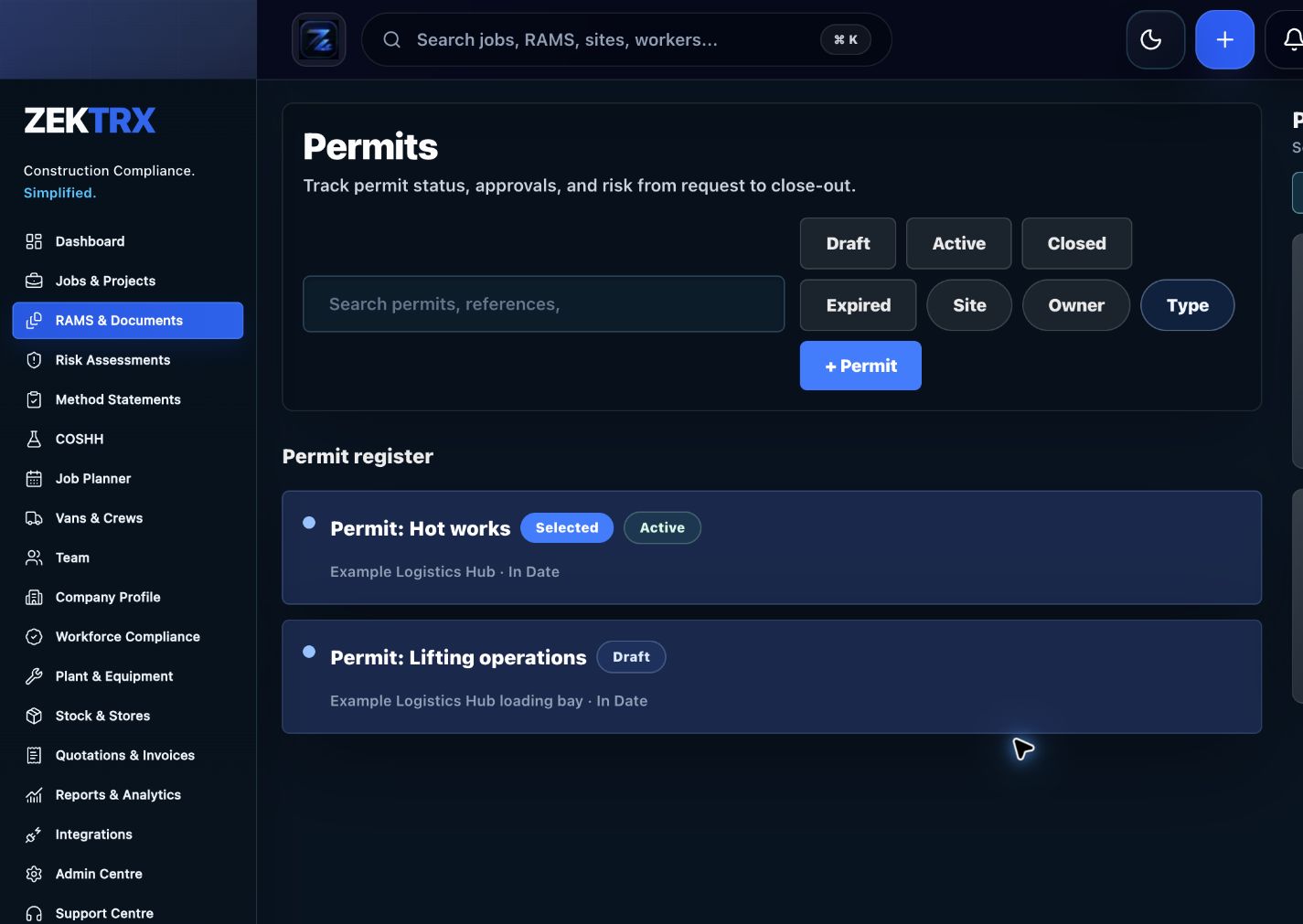
Permits
Connect permits, approvals and task controls to the work package instead of leaving them as separate forms.
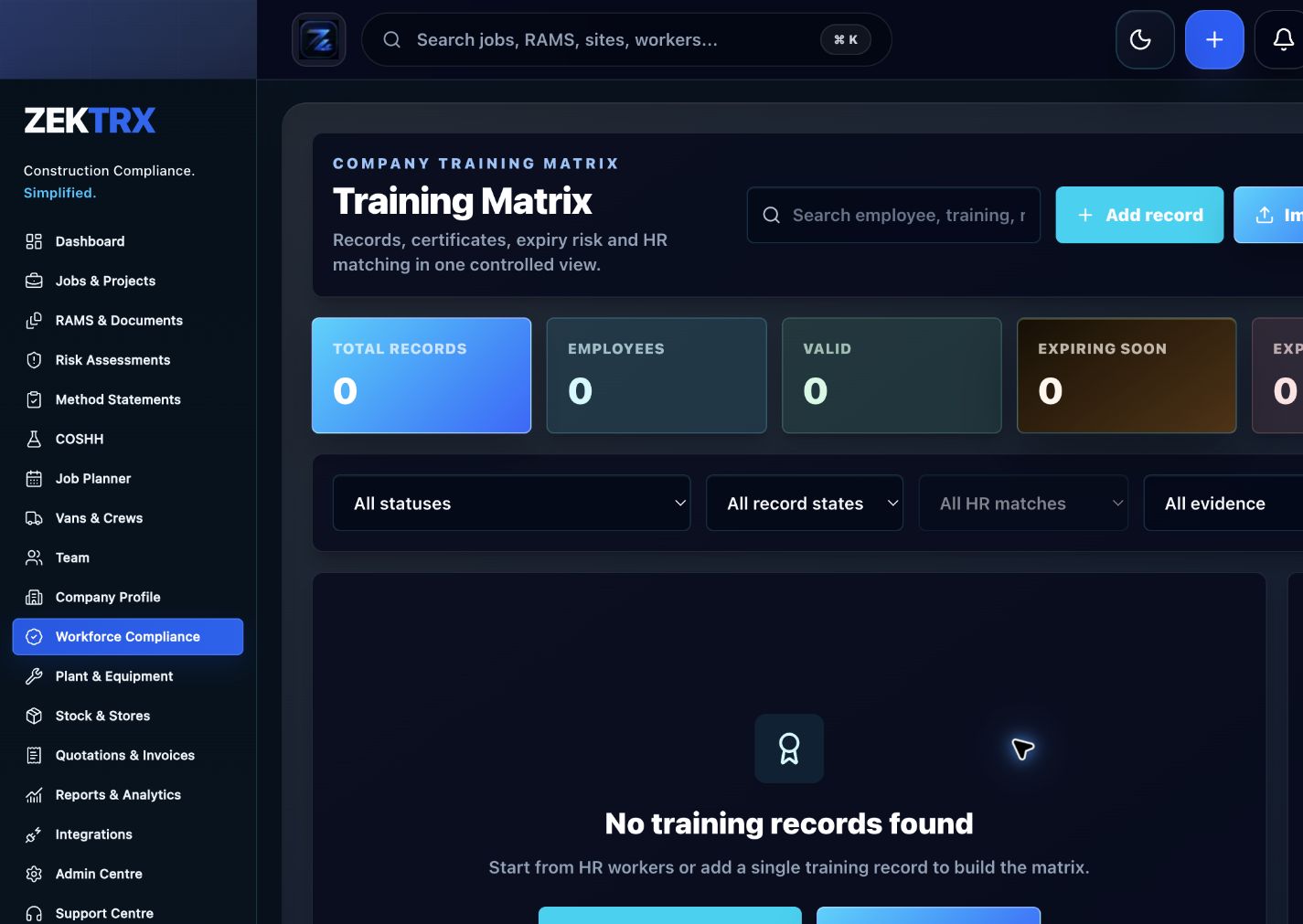
Training
Bring training records, inductions and briefing evidence into the same view as safety actions and site work.
Replace paper RAMS, disconnected incident forms, COSHH folders, inspection spreadsheets and training trackers with a connected safety management workflow built for construction and field teams.
Risk & method
Create risk assessments and method statements with task steps, hazards, controls, PPE, review notes and crew sign-off.
Incidents
Capture what happened, where it happened, who was involved, photos, immediate controls and corrective actions.
Substance safety
Keep COSHH assessments and safety data sheets linked to substances, tasks, controls, emergency details and field evidence.
Mobile checks
Run site inspections, document observations, assign actions and keep audit trails attached to jobs and crews.
Briefings
Plan talks, brief workers, collect attendance evidence and connect meeting topics to job risks and actions.
Readiness
Track worker training, certification evidence, expiry dates, subcontractor readiness and gaps before work starts.
Subcontractors
Keep subcontractor documents, readiness checks, actions and site evidence visible in the same safety programme.
Zektrx helps teams organise the records safety managers need to review incidents, prove follow-up, monitor training and prepare audit evidence. It supports the workflow around compliance; your safety team remains responsible for deciding what applies.
Organise incident details, follow-up evidence and records so safety teams can review what happened and demonstrate close-out.
Keep site observations, photos, assigned actions, due dates and close-out notes in a clearer audit trail.
Track ownership, overdue work, repeat hazards and completion evidence after incidents, inspections or field observations.
Zektrx helps organise records and workflows. Your competent safety team still decides what applies and how obligations are met.
Coordinate safety records, crews, subcontractors, inspections and corrective actions across multiple active jobs.
Build repeatable job hazard workflows for trade-specific work while keeping field evidence easy to find.
See open actions, training gaps, incident follow-up, COSHH records and audit evidence without rebuilding reports by hand.
Access job controls, complete inspections, report incidents and submit evidence from the site workflow.
Many safety platforms are built for enterprise programmes and long implementations. Zektrx is designed for contractors that need a practical way to start, prove progress and expand from core safety workflows into wider operations.
Start with focused safety workflows instead of a heavyweight enterprise rollout that takes months to configure.
Use structured job context to speed up first drafts for hazards, controls, briefings and reports.
Connect safety records to contractor operations: jobs, crews, subcontractors, documents, actions and reports.
Keep RAMS, COSHH, inspections, incidents, training and actions together instead of scattering them across forms and folders.
Build RAMS, capture incidents, manage COSHH records, run inspections, close actions and report safety status from one connected contractor workspace.
A safety management system is the organised set of policies, workflows, responsibilities and records a company uses to identify hazards, control risk, train workers, report incidents and improve safety performance.
A common model uses four components: policy, risk management, assurance and promotion. In practical construction terms, that means clear expectations, job hazard controls, inspections and incident reviews, plus training and communication.
RAMS means risk assessments and method statements. Together they explain the hazards, controls and safe sequence of work so a competent person can review the plan and brief the crew.
No. It can help organise RAMS, incident records, training evidence, inspections and corrective actions, but software does not replace competent safety judgement or legal compliance review.
Yes. Zektrx can support incident and near-miss reporting, corrective actions, COSHH records, inspections, training evidence and contractor readiness in one safety workflow.
Cost depends on team size, rollout scope and which workflows you need. Contractors can start with focused safety workflows and expand into broader operations when the team is ready.