








Plan
Move the article into an operating plan.
Good guidance should become owned work, review points and clear next actions inside the contractor workspace.
A safety and operations article for recording delay evidence in site diaries with photos, actions, instructions and daily context.
Safety Articles
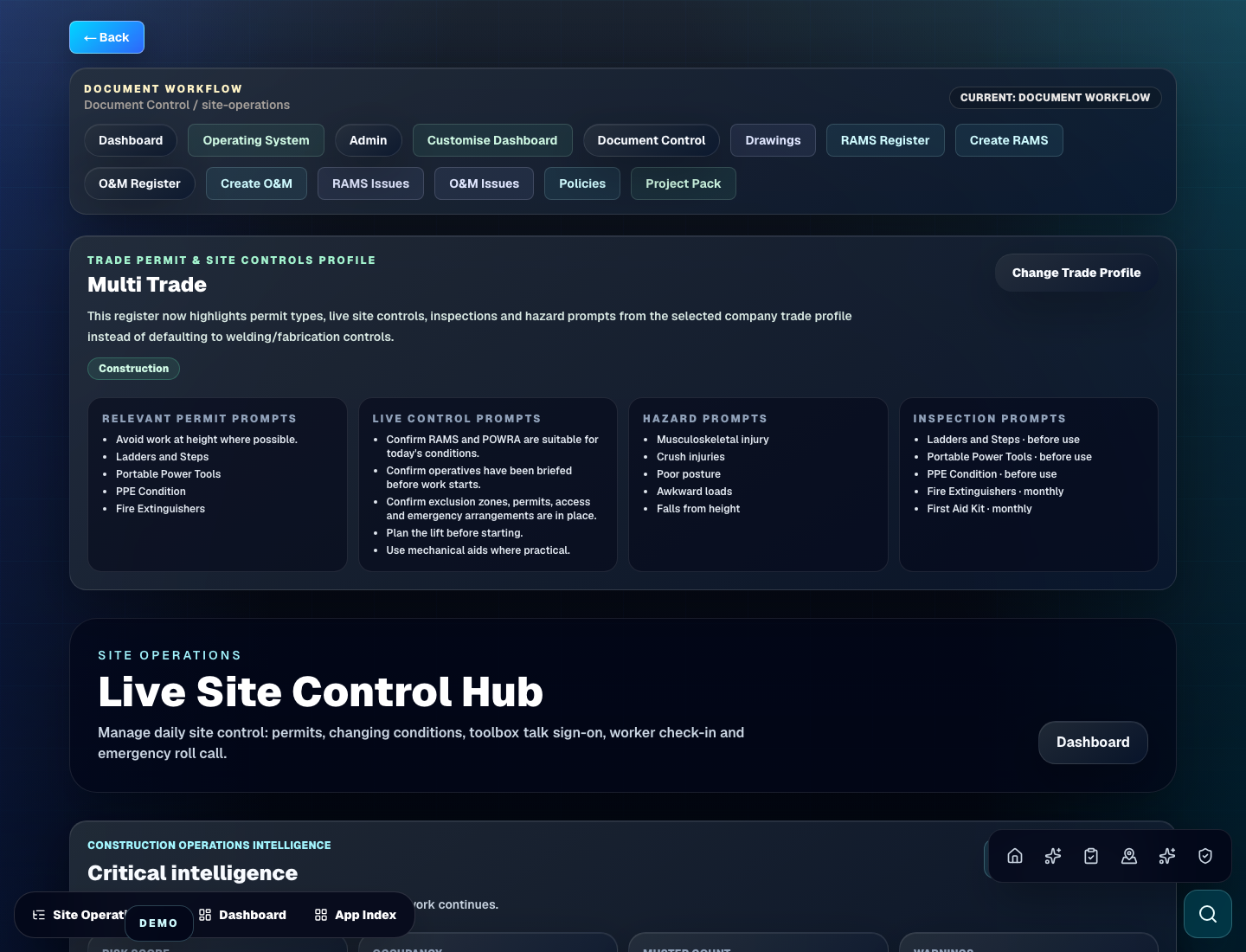
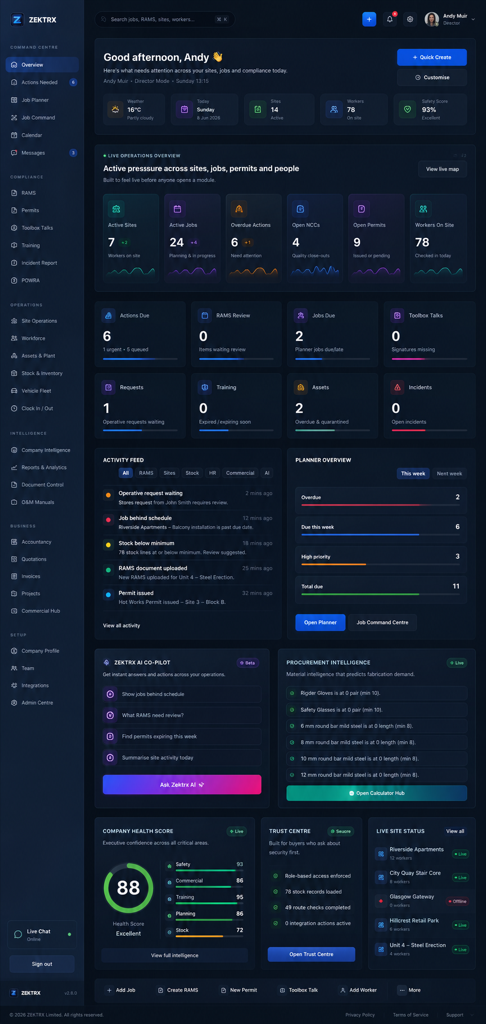
This resource should not sit apart from the product. Zektrx connects the guidance to planning, controlled records and review-ready evidence so teams can act on it.
Plan
Good guidance should become owned work, review points and clear next actions inside the contractor workspace.
Control
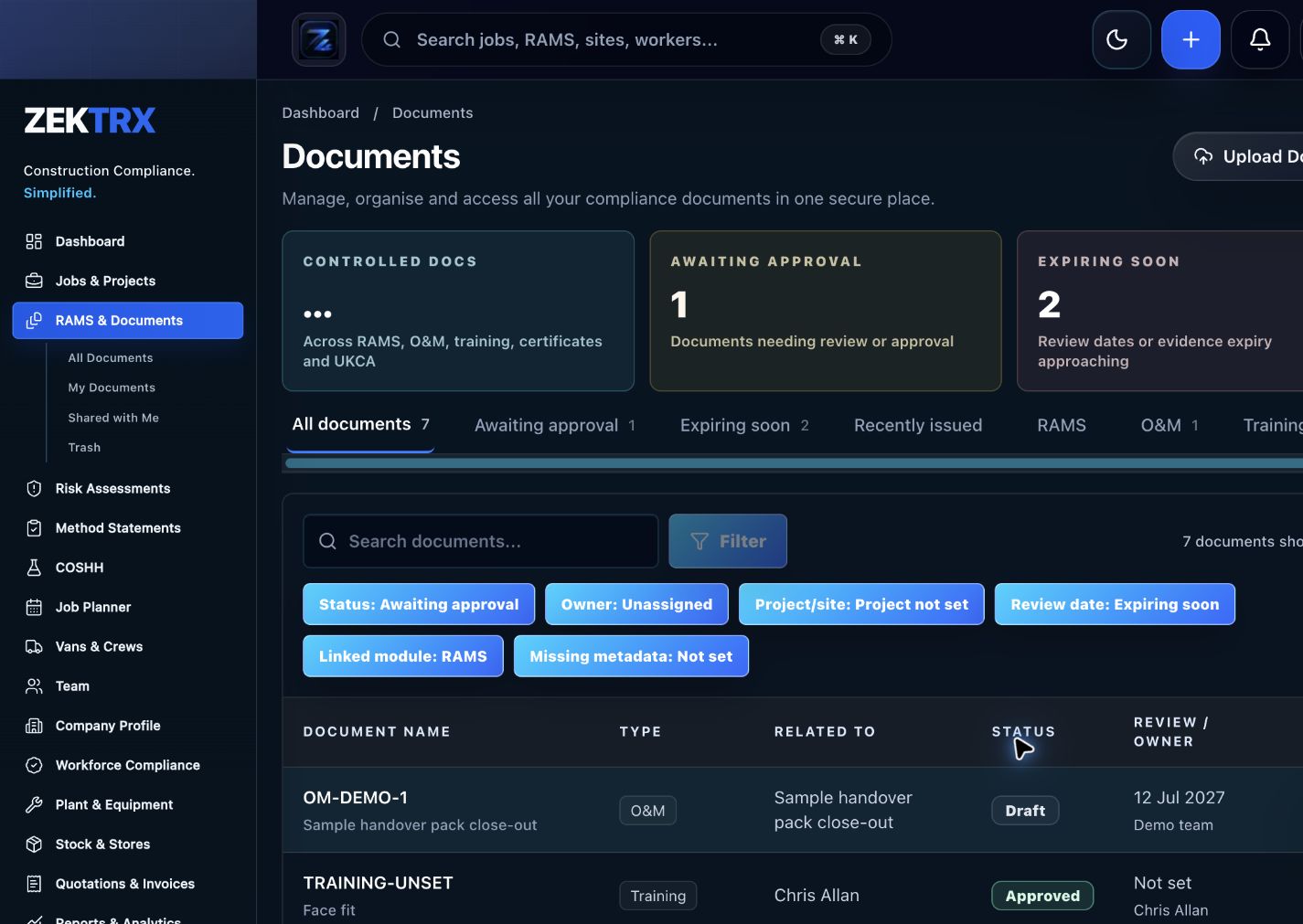
The resource should point into controlled records, current versions, approvals and the proof teams need later.
Review
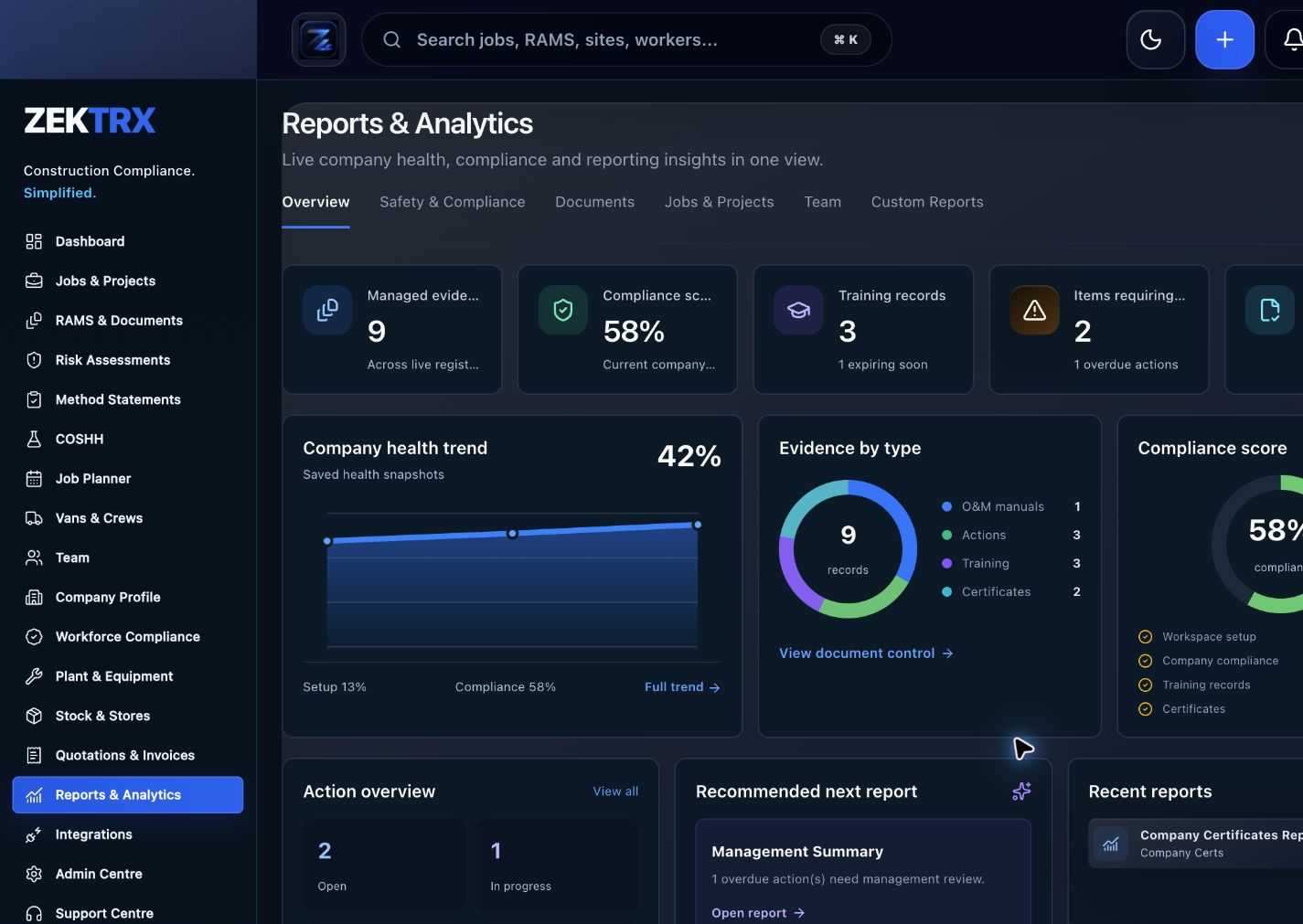
Reports and audit packs make the article practical after the work is complete, not just useful while reading.
Review the topic, reading time, editorial status and related Zektrx workflows before moving into the detailed guidance.
Topic
Safety Articles
Reading path
5 article sections
Review status
Published 26 June 2026
Connected links
Site Operations Software
Delay evidence is hardest to rebuild after the event. A useful site diary records what happened on the day, who was affected, what evidence supports the note and what action was taken.
The aim is not to write a legal argument in the diary. The aim is to create a reliable daily record that can be reviewed later.
Avoid vague entries such as "held up today". Record what stopped or slowed the work, when it happened, who was involved and what evidence is attached. If the impact is not known yet, say what needs to be checked next.
If a delay needs a response, the diary should create or link to an action. That makes it easier to see whether the issue was escalated, answered or carried forward.
Zektrx helps contractors connect site diaries, photos, actions, documents and reporting so daily records are easier to search, share and defend.
Related Zektrx workflow
Put it into practice
Start with the £5 for 14 days trial, then connect RAMS, jobs, stock, documents, records and reporting in one place.
1. Learn
Practical site safety tips for turning daily briefings, inspections, actions and evidence into a usable contractor record.
A safety checklist app guide for contractors managing RAMS checks, site inspections, toolbox talks, permits, actions and evidence.
A safety article for capturing site inspection photos, comments, actions and close-out evidence in a usable way.
2. Use
Screen work-at-height task risk using height, duration, people and control rating. Free online tool for UK construction and trade teams.
Estimate daily noise exposure from sound level and exposure duration. Free online tool for UK construction and trade teams.
Estimate hand-arm vibration A(8) exposure from vibration magnitude and trigger time. Free online tool for UK construction and trade teams.
3. Automate
Connect RAMS, incidents, training, permits, inspections and safety evidence.
Capture point-of-work risk checks and daily task controls.
Manage safety records, briefings, incidents, actions and evidence for contractors.
4. Start
Use Zektrx to add owners, review dates, evidence, signatures, actions and reporting.
Start Trial in ZektrxRelated Guides
Practical site safety tips for turning daily briefings, inspections, actions and evidence into a usable contractor record.
A safety checklist app guide for contractors managing RAMS checks, site inspections, toolbox talks, permits, actions and evidence.
A safety article for capturing site inspection photos, comments, actions and close-out evidence in a usable way.
Related Calculators
Screen work-at-height task risk using height, duration, people and control rating. Free online tool for UK construction and trade teams.
Estimate daily noise exposure from sound level and exposure duration. Free online tool for UK construction and trade teams.
Estimate hand-arm vibration A(8) exposure from vibration magnitude and trigger time. Free online tool for UK construction and trade teams.
Related Templates
Plan briefing topics, attendance, signatures, follow-up questions and evidence. Free printable construction template from Zektrx.
Control permit scope, hazards, isolations, approvals, handback and close-out checks. Free printable construction template from Zektrx.
Record weather, labour, plant, deliveries, progress, delays, visitors, photos and instructions. Free printable construction template from Zektrx.
Related Features
Connect RAMS, incidents, training, permits, inspections and safety evidence.
Capture point-of-work risk checks and daily task controls.
Manage safety records, briefings, incidents, actions and evidence for contractors.
Related Industries
Roofing contractor RAMS, work-at-height controls, permits, photos, site records and client evidence.
Groundworks RAMS, permits, site diaries, plant checks, photos, quality records and delay evidence. One platform for documents, evidence and compliance.
Scaffolding contractor RAMS, inspections, handover certificates, permits, photos and site evidence. One platform for documents, evidence and compliance.
Related Comparisons
Compare Zektrx with SafetyCulture for contractors that need inspections plus RAMS, permits, documents, actions, site diaries and construction evidence packs.
A practical buyer guide for choosing RAMS software that supports risk assessments, method statements, revisions, signatures and site evidence.
A site diary software buyer guide for construction teams that need daily records, photos, labour, delays, actions and evidence.
Related FAQs
Reusable templates help, but they should be adapted for each roof, access method, weather exposure and task.
From Roofing Contractors Software
Yes. Site photos can be connected to jobs, diaries, actions and handover records.
From Roofing Contractors Software
Yes. Permit workflows can help control higher-risk tasks and handback evidence.
From Roofing Contractors Software
Yes. Site diary workflows can capture labour, weather, progress, conditions, delays and evidence.
From Groundworkers Software
This resource is for contractor, site, compliance and operations teams reviewing site diary delay evidence guide and deciding which records should become controlled workflows.
Yes. Zektrx is designed to turn recurring construction checklists, documents, actions, signatures and evidence into connected workflows.
No. Use this as practical workflow guidance and keep competent legal, safety, engineering or site-specific review where required.