








Plan
Move the article into an operating plan.
Good guidance should become owned work, review points and clear next actions inside the contractor workspace.
A construction safety guide for planning, recording and reviewing silica dust controls on cutting, drilling, grinding and dusty work.
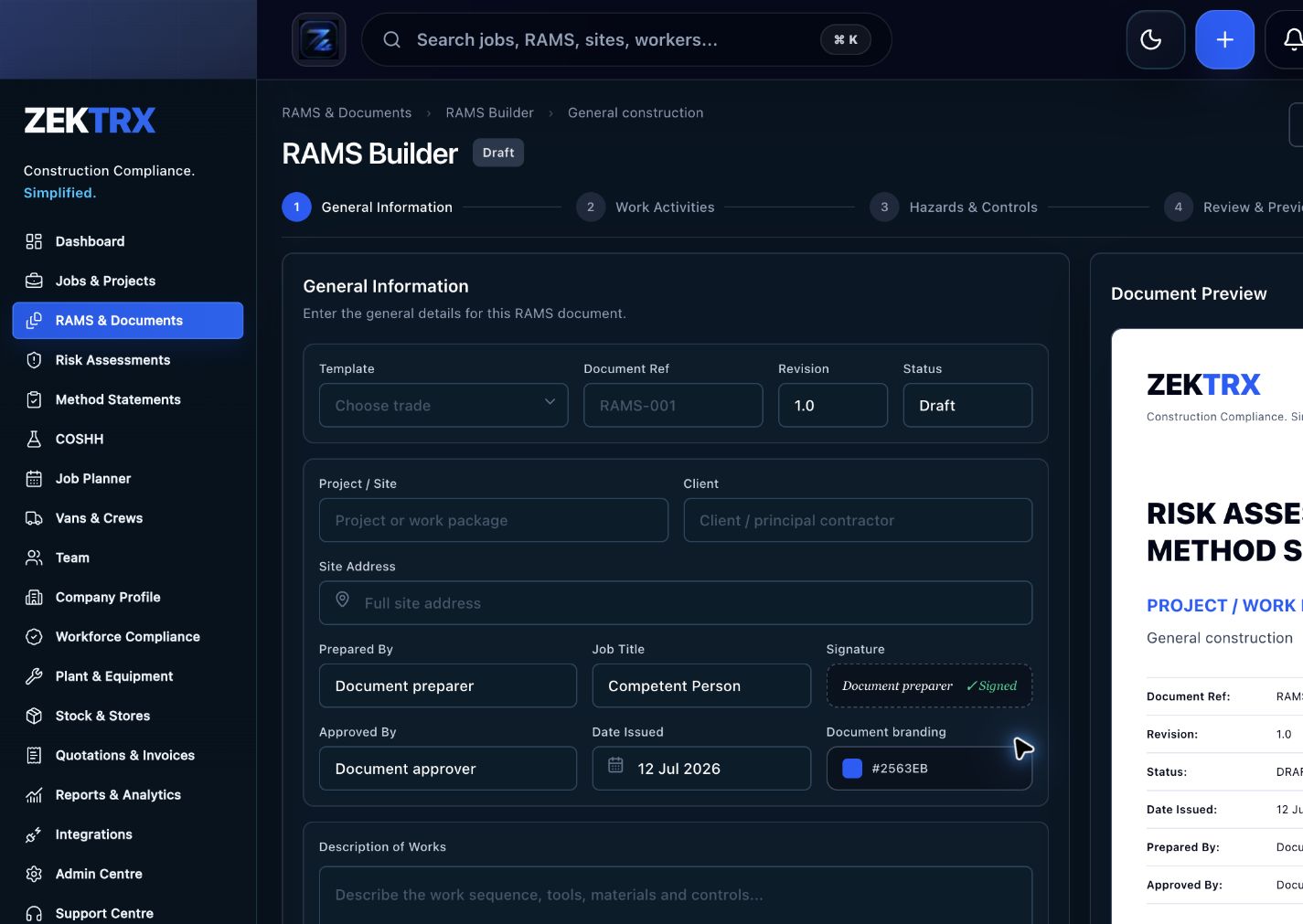
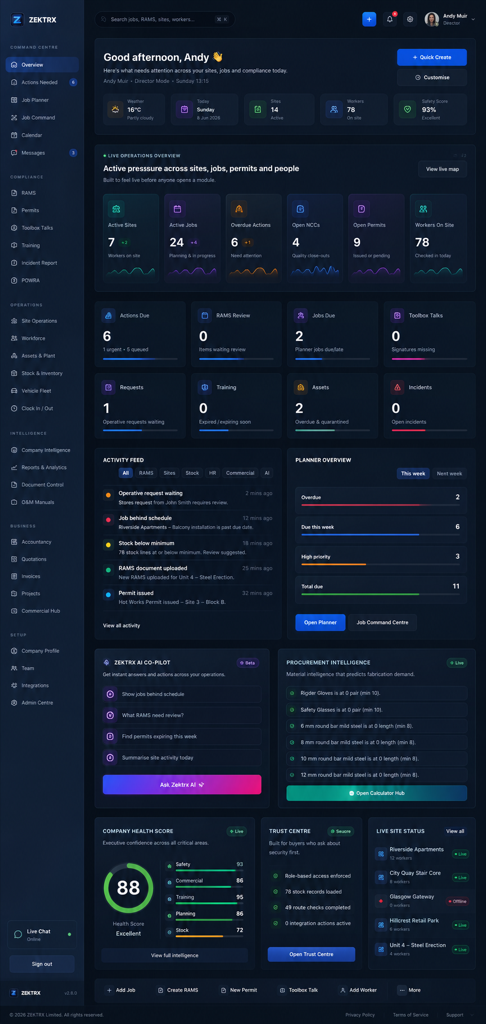
COSHH/SDS
This resource should not sit apart from the product. Zektrx connects the guidance to planning, controlled records and review-ready evidence so teams can act on it.
Plan
Good guidance should become owned work, review points and clear next actions inside the contractor workspace.
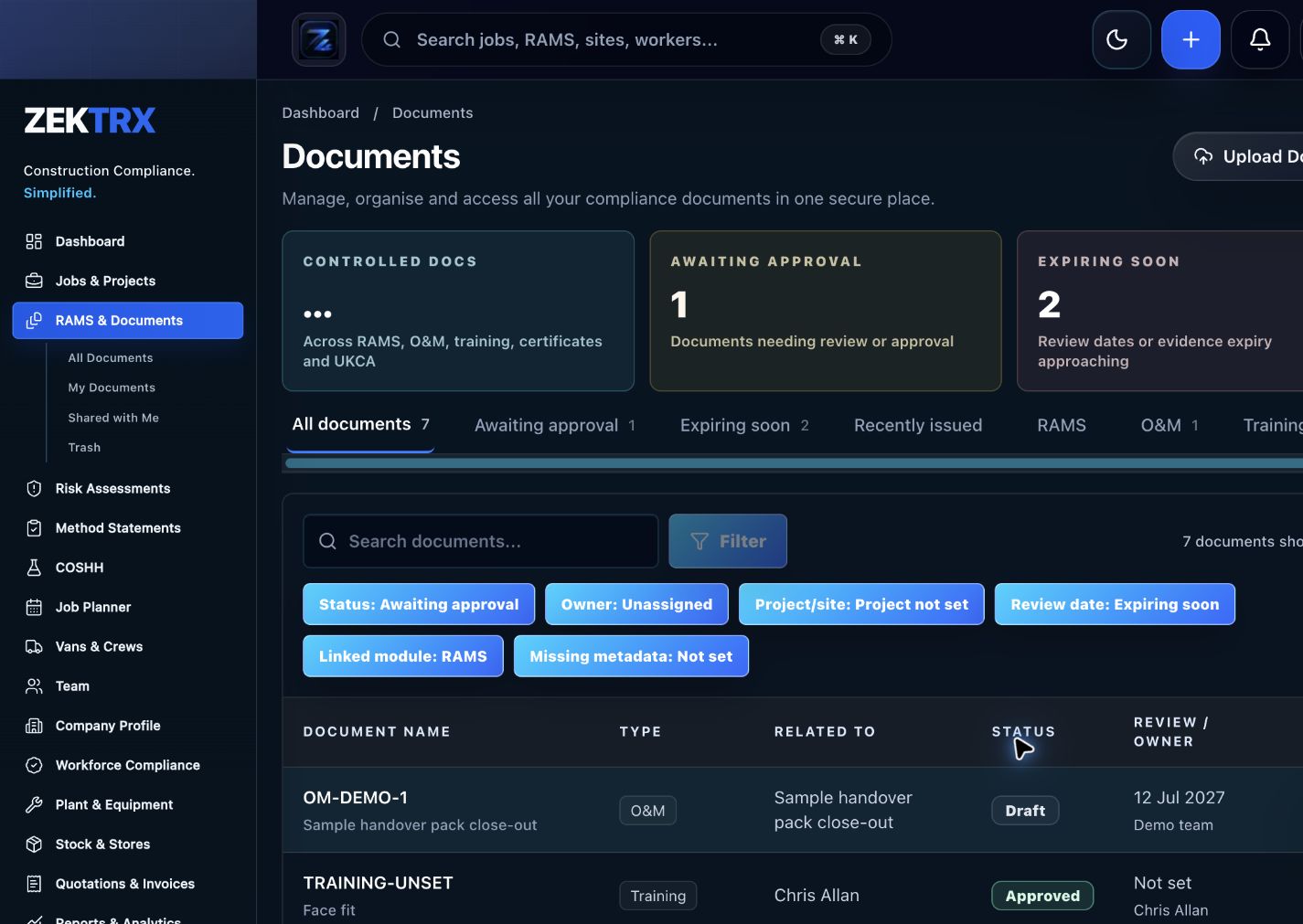
Control
The resource should point into controlled records, current versions, approvals and the proof teams need later.
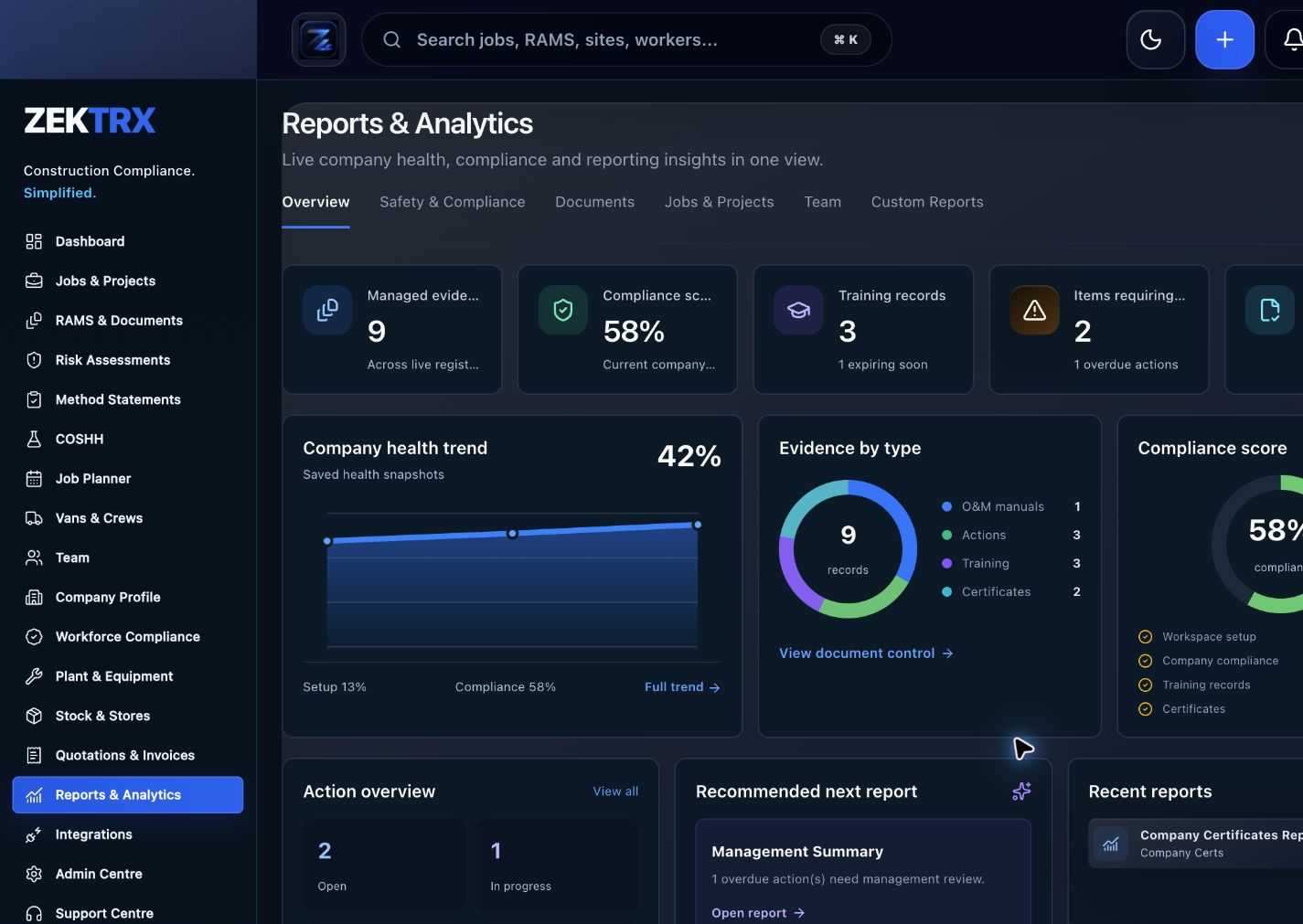
Review
Reports and audit packs make the article practical after the work is complete, not just useful while reading.
Review the topic, reading time, editorial status and related Zektrx workflows before moving into the detailed guidance.
Topic
COSHH/SDS
Reading path
5 article sections
Review status
Published 5 July 2026
Connected links
COSHH Software for Construction
Silica is found in materials such as concrete, bricks, mortar, sand, stone and tiles. When these materials are cut, drilled, ground or broken, fine respirable crystalline silica dust can be produced.
The smallest dust is the hardest to see and the most important to control. Do not wait until a visible cloud appears before treating the task as a health risk.
A silica dust record should show how the team has assessed the task, selected controls and checked whether those controls are still working.
Silica dust should not be hidden inside a generic method statement. Link the dust controls to the RAMS, COSHH assessment, toolbox talk, inspection and any health surveillance requirements identified by competent people.
The record should be practical enough for supervisors to check on site. If the control depends on a vacuum, water feed, RPE model or exclusion zone, name it clearly.
Review HSE silica dust guidance, HSE construction dust guidance and HSE health surveillance guidance for RCS.
Zektrx helps teams connect silica dust controls to COSHH, RAMS, SDS records, toolbox talks, photos and action close-out. That makes dust control easier to review instead of leaving it as a line buried in a template.
Related Zektrx workflow
Put it into practice
Start with the £5 for 14 days trial, then connect RAMS, jobs, stock, documents, records and reporting in one place.
1. Learn
A COSHH assessment checklist for recording substances, SDS references, exposure routes, controls, PPE, storage and briefings.
Learn how to connect COSHH assessments, safety data sheets, substance registers, task controls and workforce briefings.
A contractor guide to COSHH software features for SDS records, substance registers, job links, briefings, reviews and evidence.
2. Use
Estimate daily noise exposure from sound level and exposure duration. Free online tool for UK construction and trade teams.
Screen work-at-height task risk using height, duration, people and control rating. Free online tool for UK construction and trade teams.
Estimate hand-arm vibration A(8) exposure from vibration magnitude and trigger time. Free online tool for UK construction and trade teams.
3. Automate
Track COSHH assessments, substance controls, SDS records and site acceptance.
Build controlled risk assessments with owners, review dates and linked evidence.
Construction-specific risk assessment workflows for hazards and site controls.
4. Start
Turn hazards, controls, owners, reviews and evidence into a controlled risk assessment workflow.
Create Risk AssessmentRelated Guides
A COSHH assessment checklist for recording substances, SDS references, exposure routes, controls, PPE, storage and briefings.
Learn how to connect COSHH assessments, safety data sheets, substance registers, task controls and workforce briefings.
A contractor guide to COSHH software features for SDS records, substance registers, job links, briefings, reviews and evidence.
Related Calculators
Estimate daily noise exposure from sound level and exposure duration. Free online tool for UK construction and trade teams.
Screen work-at-height task risk using height, duration, people and control rating. Free online tool for UK construction and trade teams.
Estimate hand-arm vibration A(8) exposure from vibration magnitude and trigger time. Free online tool for UK construction and trade teams.
Related Templates
Record substances, SDS details, exposure routes, PPE, storage and emergency controls. Free printable construction template from Zektrx.
Identify hazards, people at risk, existing controls, further actions and review dates. Free printable construction template from Zektrx.
A controlled structure for task hazards, method statement steps, controls, signatures and review evidence.
Related Features
Track COSHH assessments, substance controls, SDS records and site acceptance.
Build controlled risk assessments with owners, review dates and linked evidence.
Construction-specific risk assessment workflows for hazards and site controls.
Related Industries
Roofing contractor RAMS, work-at-height controls, permits, photos, site records and client evidence.
Scaffolding contractor RAMS, inspections, handover certificates, permits, photos and site evidence. One platform for documents, evidence and compliance.
Electrical contractor RAMS, permits, testing evidence, drawings, site records and handover packs. One platform for documents, evidence and compliance.
Related Comparisons
A practical buyer guide for choosing RAMS software that supports risk assessments, method statements, revisions, signatures and site evidence.
Compare Zektrx with paper RAMS and Word/PDF RAMS packs for contractors that need signatures, revisions, review evidence and site acceptance.
Compare Zektrx with SafetyCulture for contractors that need inspections plus RAMS, permits, documents, actions, site diaries and construction evidence packs.
Related FAQs
Yes. The COSHH assessment should reference current safety data sheet information.
From COSHH Assessment Template
Yes. COSHH records can link substances, SDS files, controls and review dates.
From COSHH Assessment Template
No. Use competent monitoring and legal guidance for exposure assessment and controls.
From Noise Exposure Calculator
Assess each exposure and combine them with a suitable occupational noise method.
From Noise Exposure Calculator
This resource is for contractor, site, compliance and operations teams reviewing silica dust controls for construction sites and deciding which records should become controlled workflows.
Yes. Zektrx is designed to turn recurring construction checklists, documents, actions, signatures and evidence into connected workflows.
No. Use this as practical workflow guidance and keep competent legal, safety, engineering or site-specific review where required.