







Plan
Move the article into an operating plan.
Good guidance should become owned work, review points and clear next actions inside the contractor workspace.
Put this into practice
Industry News
A practical guide to AI RAMS, drawing review, RFIs, site diaries, O&M packs and action lists in contractor workflows.
Industry News
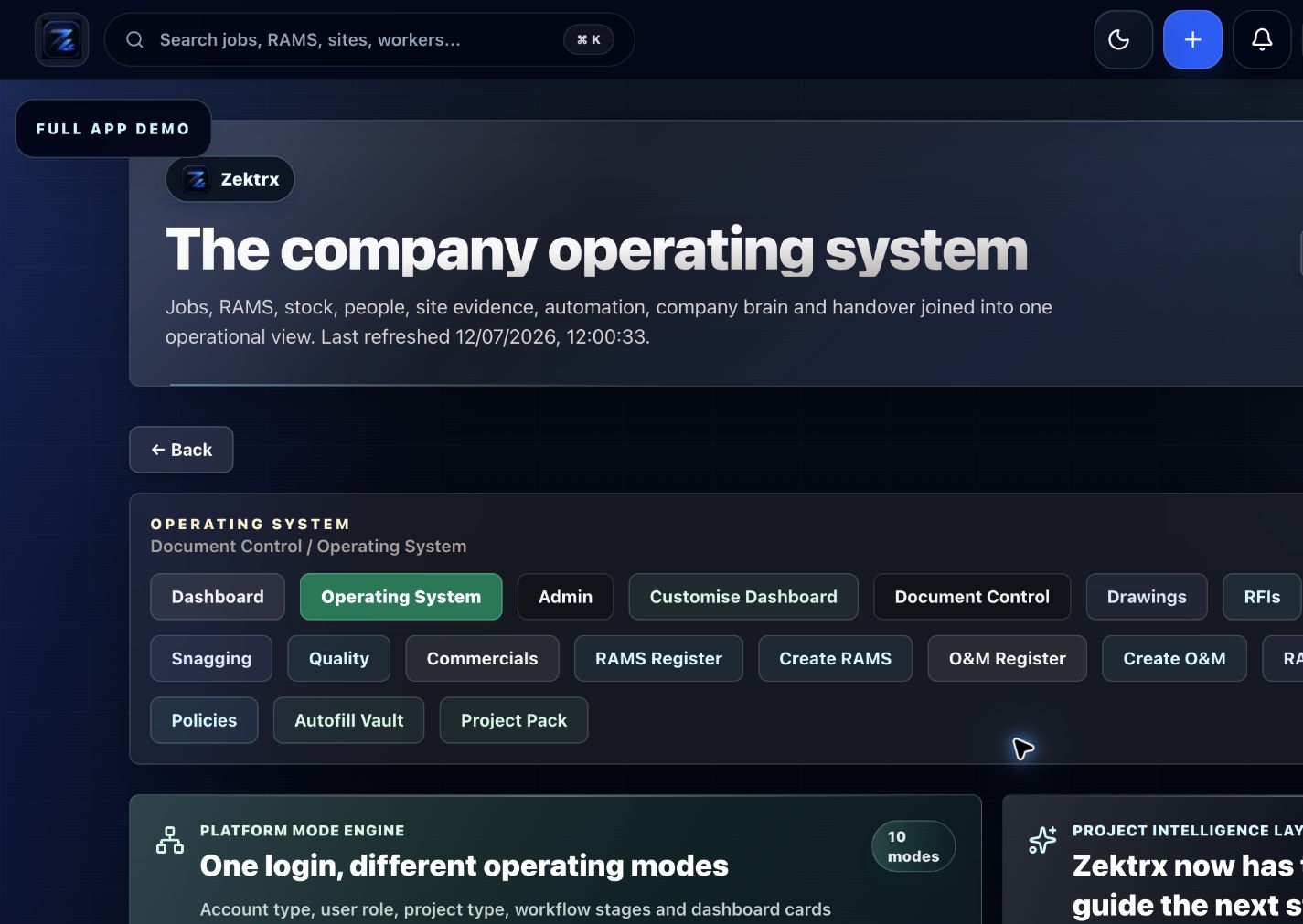
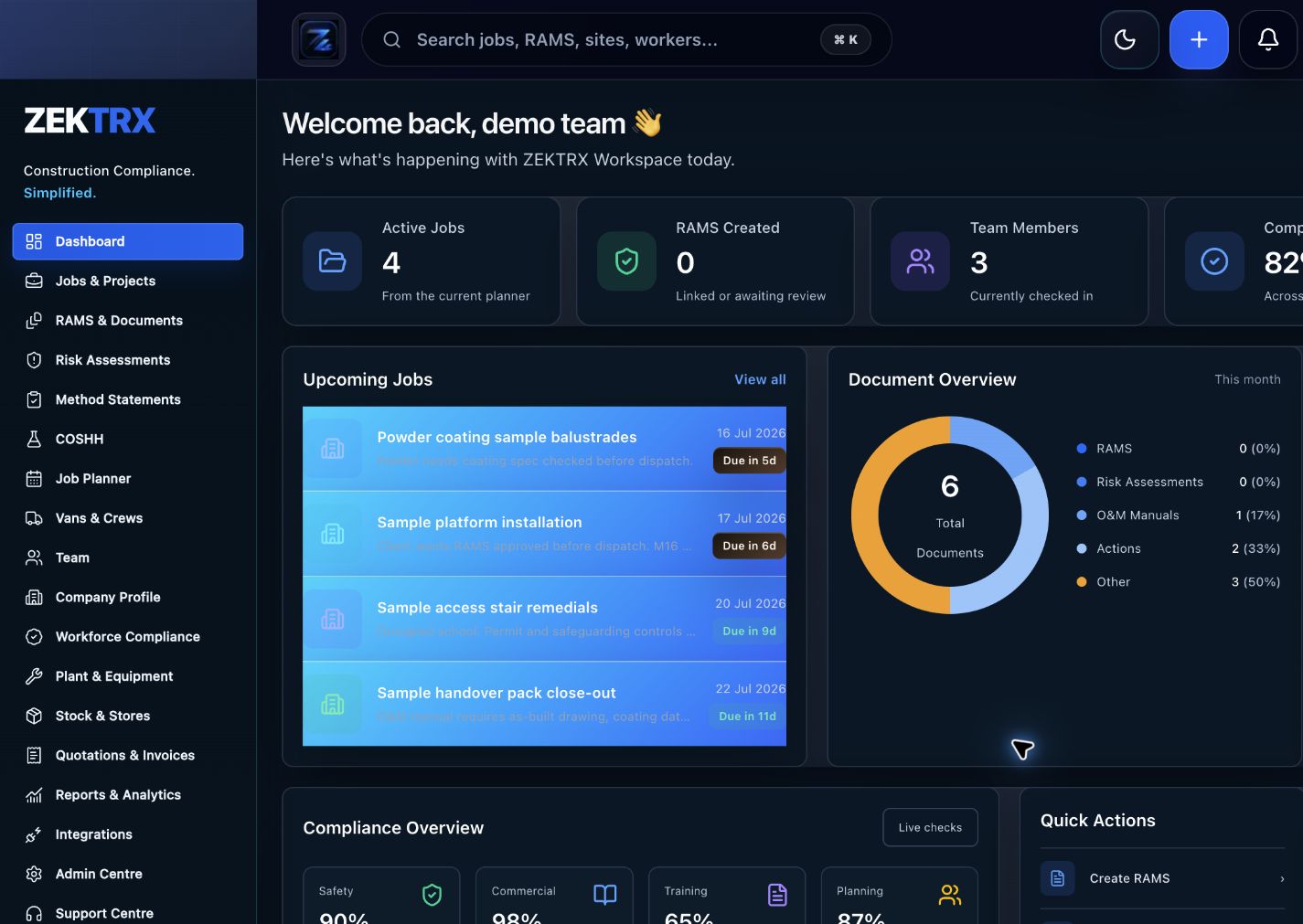
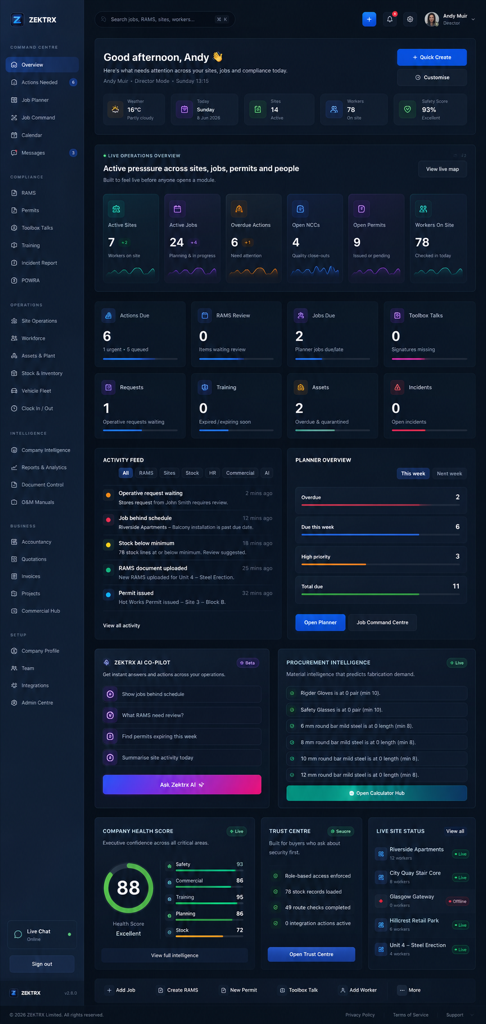
This resource should not sit apart from the product. Zektrx connects the guidance to planning, controlled records and review-ready evidence so teams can act on it.
Plan
Industry News
Control
Risk Assessment Software for Construction
Review
Construction KPI Dashboard Starter Guide
Plan
Good guidance should become owned work, review points and clear next actions inside the contractor workspace.
Put this into practice
Industry News
Control
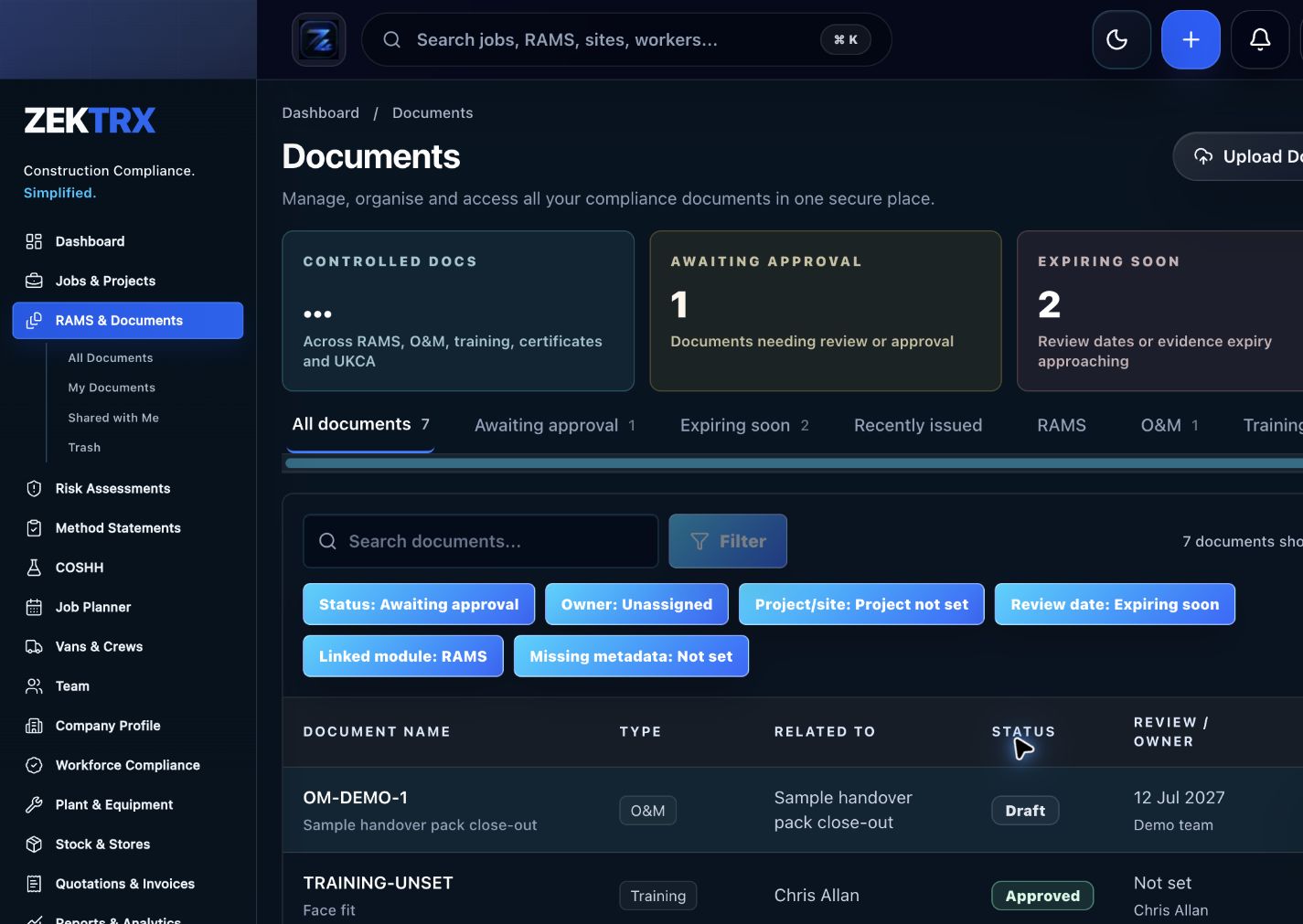
The resource should point into controlled records, current versions, approvals and the proof teams need later.
Put this into practice
Risk Assessment Software for Construction
Review
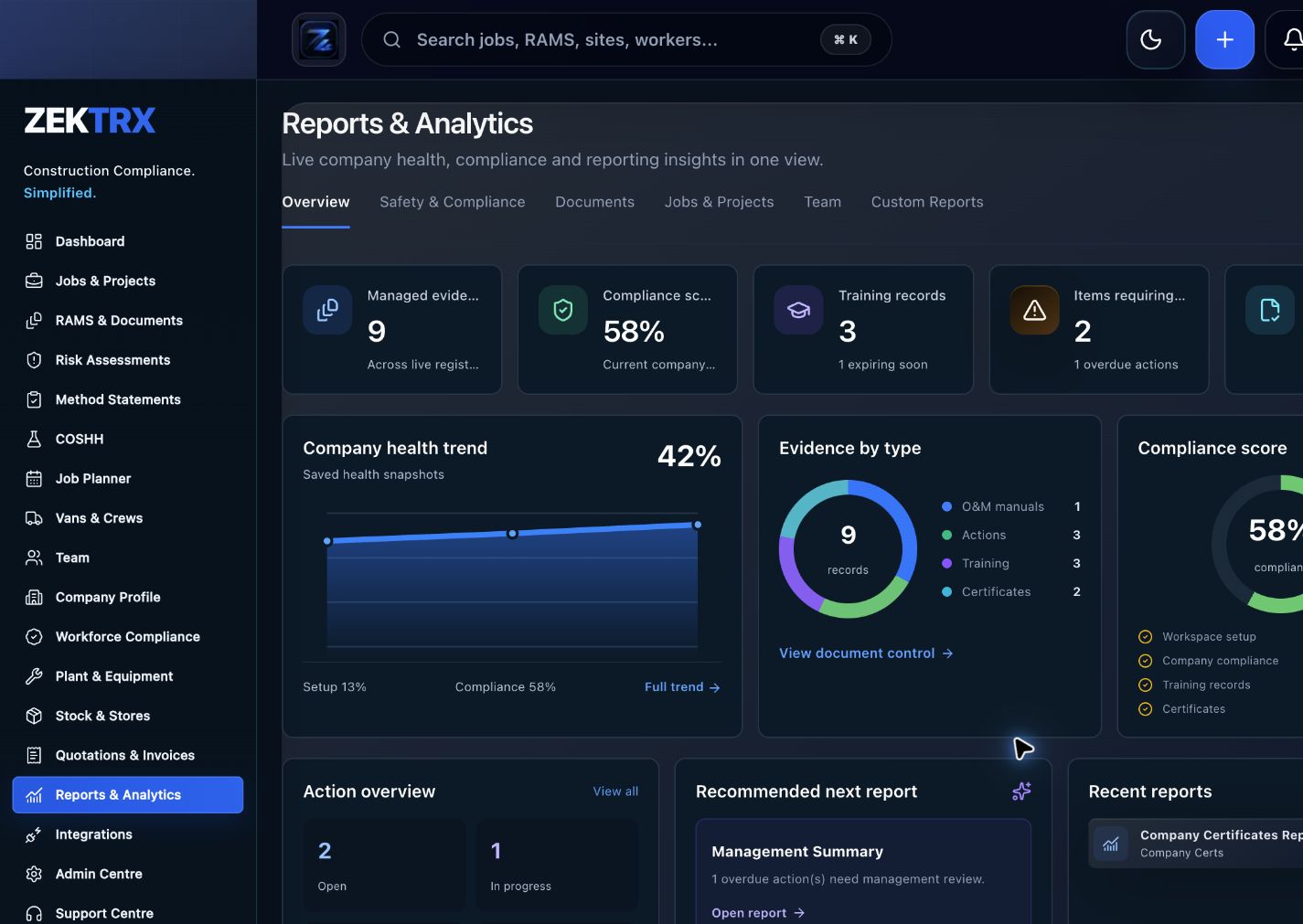
Reports and audit packs make the article practical after the work is complete, not just useful while reading.
Put this into practice
Construction KPI Dashboard Starter Guide
Review the topic, reading time, editorial status and related Zektrx workflows before moving into the detailed guidance.
Topic
Industry News
Reading path
5 article sections
Review status
Published 18 June 2026
Connected links
AI Construction Software
AI can help contractors draft, summarise and organise information, but it is most useful when it sits inside a controlled workflow. The output should still have an owner, review route, version history and evidence trail.
For Zektrx users, the practical opportunity is not just "generate a document". It is connecting AI suggestions to RAMS, drawings, RFIs, site diaries, O&M packs and action lists so the team can move faster without losing control.
AI outputs should not become invisible final records. Keep a clear review stage that shows who accepted the output, what changed and which version was issued. This matters for RAMS, RFIs, diary entries and handover packs because clients and auditors need to trust the record.
AI works better when it can reference the right project context. That includes the drawing revision, RAMS version, site photo, inspection, document, action or O&M evidence item behind the suggestion.
Zektrx is being shaped around AI that supports contractor workflows rather than replacing competent judgement. The aim is to reduce repeated admin while keeping review, ownership, evidence and reporting clear.
Related Zektrx workflow
Put it into practice
Start with the £5 for 14 days trial, then connect RAMS, jobs, stock, documents, records and reporting in one place.
1. Learn
A short industry news style article on why contractors are connecting RAMS, permits, audits, evidence and reporting workflows.
Industry news style guidance on using AI to support RAMS drafting while keeping competent review and site-specific checks in place.
Guide to connecting RAMS, drawings, RFIs, site diary, snagging, documents, quality, workforce, procurement, commercials and AI project manager workflows.
2. Use
Estimate hand-arm vibration A(8) exposure from vibration magnitude and trigger time. Free online tool for UK construction and trade teams.
Check ladder angle and vertical reach using ladder length and wall distance. Free online tool for UK construction and trade teams.
Estimate rectangular load weight from length, width, thickness and density before lifting-plan review. Free online tool for UK construction and trade teams.
3. Automate
Manage electrical RAMS, permits, drawings, testing evidence and handover.
Connect mechanical RAMS, plant records, documents, inspections and handover.
Manage roofing RAMS, work-at-height evidence, photos and handover records.
4. Start
Move from static documents into controlled RAMS with review, signatures, revisions and evidence.
Create RAMSRelated Guides
A short industry news style article on why contractors are connecting RAMS, permits, audits, evidence and reporting workflows.
Industry news style guidance on using AI to support RAMS drafting while keeping competent review and site-specific checks in place.
Guide to connecting RAMS, drawings, RFIs, site diary, snagging, documents, quality, workforce, procurement, commercials and AI project manager workflows.
Related Calculators
Estimate hand-arm vibration A(8) exposure from vibration magnitude and trigger time. Free online tool for UK construction and trade teams.
Check ladder angle and vertical reach using ladder length and wall distance. Free online tool for UK construction and trade teams.
Estimate rectangular load weight from length, width, thickness and density before lifting-plan review. Free online tool for UK construction and trade teams.
Related Templates
A controlled structure for task hazards, method statement steps, controls, signatures and review evidence.
Identify hazards, people at risk, existing controls, further actions and review dates. Free, editable construction template from Zektrx.
Plan the safe sequence of work, people, plant, materials, controls and hold points. Free, editable construction template from Zektrx.
Related Features
Manage electrical RAMS, permits, drawings, testing evidence and handover.
Connect mechanical RAMS, plant records, documents, inspections and handover.
Manage roofing RAMS, work-at-height evidence, photos and handover records.
Related Industries
Electrical contractor RAMS, permits, testing evidence, drawings, site records and handover packs. One platform for documents, evidence and compliance.
Mechanical contractor RAMS, permits, plant records, drawings, inspections and handover workflows. One platform for documents, evidence and compliance.
Principal contractor hubs for subcontractor coordination, RAMS, permits, site records, actions and audit evidence.
Related Comparisons
Compare Zektrx with SafetyCulture for contractors that need inspections plus RAMS, permits, documents, actions, site diaries and construction evidence packs.
A construction management software buyer guide for teams comparing project controls, site records, documents, compliance and contractor operations.
A practical buyer guide for choosing RAMS software that supports risk assessments, method statements, revisions, signatures and site evidence.
Related FAQs
Yes. RAMS and method statement workflows can be adapted to electrical tasks and site conditions.
From Electrical Contractors Software
Yes. Permit workflows can connect scope, controls, approval and handback evidence.
From Electrical Contractors Software
Yes. Documents, photos, actions and completion evidence can be grouped for handover.
From Electrical Contractors Software
Yes. O&M, document and evidence workflows can support mechanical handover packs.
From Mechanical Contractors Software
This resource is for contractor, site, compliance and operations teams reviewing ai construction workflow guide for contractors and deciding which records should become controlled workflows.
Yes. Zektrx is designed to turn recurring construction checklists, documents, actions, signatures and evidence into connected workflows.
No. Use this as practical workflow guidance and keep competent legal, safety, engineering or site-specific review where required.